Post-Impressionism (1880-1910)
Post-Impressionism (1880-1910)

Paul Cézanne - The Viaduct at L'Estaque (Le Viaduc à
l'Estaque) - 1882? -
http://www.oberlin.edu/~allenart/Modern-collection.html
Post-Impressionism is an umbrella term used to describe a variety of artists who were influenced by Impressionism but took their art in different directions.
There is no single well-defined style of Post-Impressionism, but in general it is less casual and more emotionally charged than Impressionist work (http://www.artcyclopedia.com/history/post-impressionism.html).
1870 - The British government began to organize schools in 1870, although they were not free to all children until 1891 (WH, p. 601).
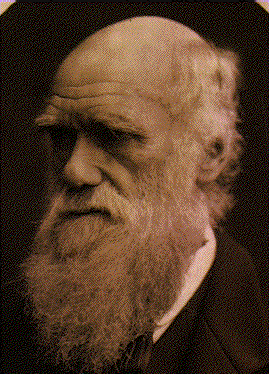
Charles Darwin - http://www.lib.virginia.edu/science/parshall/darwinport.html
1871 - Charles Darwin publishes The Descent of Man, where he said that humans too had evolved from earlier forms of life. Darwin started the ongoing controversy of special creation in his 1859 book titled, The Origin of Species by Means of Natural Selection (WH, p. 598). An Online Library of Literature - Charles Darwin - http://www.literature.org/authors/darwin-charles/
1872 - Susan B. Anthony and 50 other women were arrested for trying to vote in the presidential election (WH, p. 603). | Top
1876 - After several years of experimenting, Alexander Graham Bell succeeded in changing the sound waves of the human voice into electric impulses, sending them through a wire and then changing them back to sound waves at the other end. Bell patented his invention, which he called a telephone (WH, p. 595).
1885 - German inventor Gottlieb Daimler mounted a gasoline engine on a bicycle to produce the world's first motorcycle. In 1890, he founded the Daimler Motor Company. He manufactured cars that he named for a friend's daughter, Mercedes (WH, p. 596).
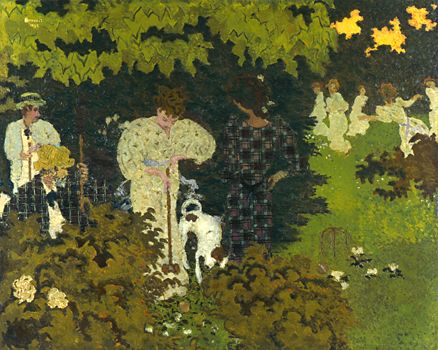
Pierre Bonnard - The Croquet Game - 1892 -
http://www.musee-orsay.fr:8081/ORSAY/orsaygb/COLLEC.NSF/3773d3f987a94472c12567240053e8be/65a6ab5f6842f258c1256754005684bf?OpenDocument
1893 - Women won the right to vote in New Zealand, but prior to World War I women had only gained voting rights in Australia (1902), Finland (1906, then a part of the Russian empire) and Norway (1913) (WH, p. 604). No country in Europe allowed women to vote. Even in Britain, where Queen Victoria was perhaps the most popular monarch the country had ever had, women could not vote or serve in Parliament (WH, p. 602).
1900 - 10 percent of the medical students in the United States were women (WH, p. 602). | Top
1900 - about 13,000 automobiles were sputtering and clattering along the roads of Europe and North America. Some of these vehicles could reach speeds of 10 to 15 miles per hour. Nearly all of them had been assembled by hand (WH, p. 596).
1900's - Art, music, and most theater which in the past had been largely the concern of the upper classes now enjoyed a larger appeal, called mass culture. Three major causes for the rise of mass culture around the turn of the century: spread of public education - literacy; improvements in communication - media - presses, phonographs, etc.; and a gradual reduction in working hours (WH, p. 606).
1903 - The Great Train Robbery, first feature film offered by American filmmaker, Edwin S. Porter, ran for eight minutes and packed theaters on both sides of the Atlantic (WH, p. 607).
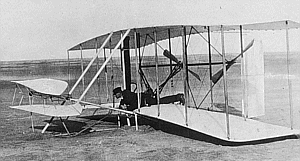
The "Flyer" after it's first 3 1/2 second flight
-
http://www.aero-web.org/history/wright/attempt.htm
1903 - Wilbur and Orville Wright launched the age of powered flight at Kitty Hawk, North Carolina, by putting a gasoline engine on an airplane. The first flight lasted only 12 seconds and covered 120 feet (WH, p. 596).
1903 - Marie and Pierre Curie shared the Nobel Prize for Physics for their work on radioactivity (WH, p. 600).
1906 - Marie Curie became the first woman ever to teach at France's prestigious Sorbonne. She won two Nobel Prized and was acknowledged as one of the foremost scientists of her time. Yet she could never become a member of the French Academy of Sciences because she was a woman. During the years when she was making her great discoveries, she could not even vote (WH, p. 601).
1910 - 5 million Americans attended some 10,000 theaters across the country each day. The European movie industry enjoyed similar growth (WH, p. 607).
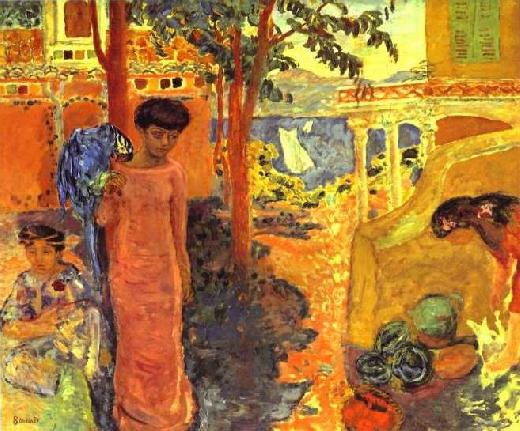
Pierre Bonnard - Girl with Parrot - 1910 - Pierre Bonnard - . Girl with Parrot
http://galeria.klp.pl/p-517.html
Pierre Bonnard (French Painter, 1867-1947) | Top
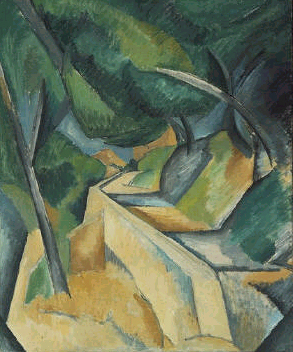
Georges Braque - Road near L'Estaque [ La route de l’Estaque ] - 1908 -
http://www.moma.org/collection/provenance/items/103.43.html
Georges Braque (French, 1882-1963) | Top
Paul Cézanne - Les grandes
baigneuses -1900-05 -
http://www.ibiblio.org/wm/paint/auth/cezanne/bath/
Paul Cézanne (French, 1839-1906) | Top
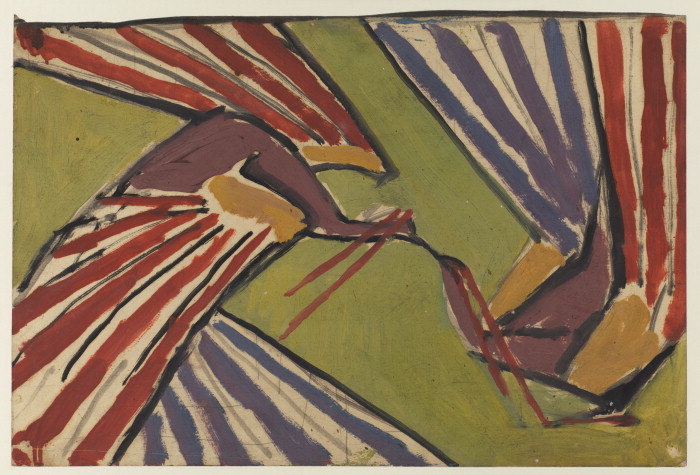
Roger Fry - Design for painted stole - peacocks (recto) - 1913-1914 -
http://www.artandarchitecture.org.uk/images/gallery/de337b20.html
Roger Fry (English Painter, 1866-1934) | Top
By the combination of lines and colors, under the pretext of some motif taken from nature, I create symphonies and harmonies that represent nothing absolutely real in the ordinary sense of the word but are intended to give rise to thoughts as music does. - Paul Gauguin
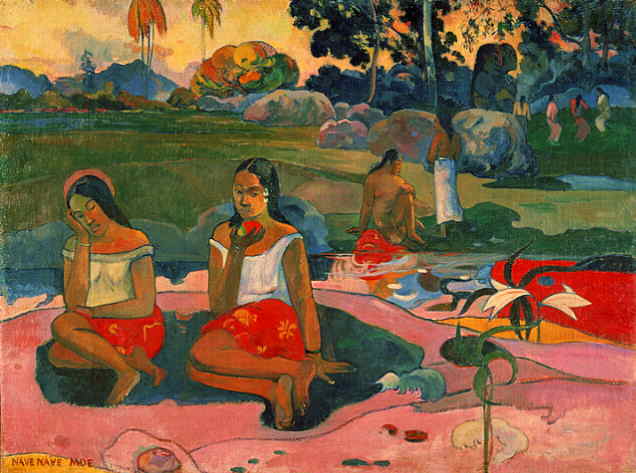
Paul Gauguin - Nave, Nave Moe (Miraculous
Source) - 1894 -
http://www.ibiblio.org/wm/paint/auth/gauguin/
Paul Gauguin (French, 1848-1903) | Top
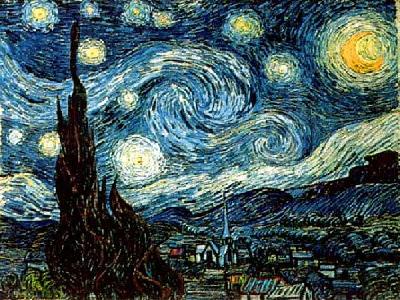
Vincent Van Gogh - Starry Night - 1889 -
http://www.best.com/~martyw/Postimpression.html
Vincent van Gogh (Dutch, 1853-1890) | Top
Henri de Toulouse-Lautrec - The Kiss - 1892 -
http://tvm.tigtail.org/TVM/L_View/X2/c.PImpressionism/toulouse-lautrec/toulouse-lautrec.html
Henri de Toulouse-Lautrec (French, 1864-1901) | Top
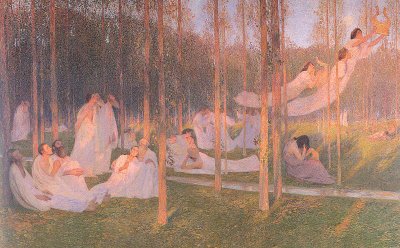
http://henrimartinpaintings.com/La_Terrasse_Ensoleillee.html
Henri Martin (French Painter, 1860-1943) | Top
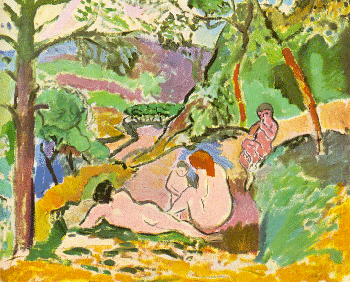
http://www.henri-matisse.net/index.html
Henri Matisse (French, 1869-1954) | Top
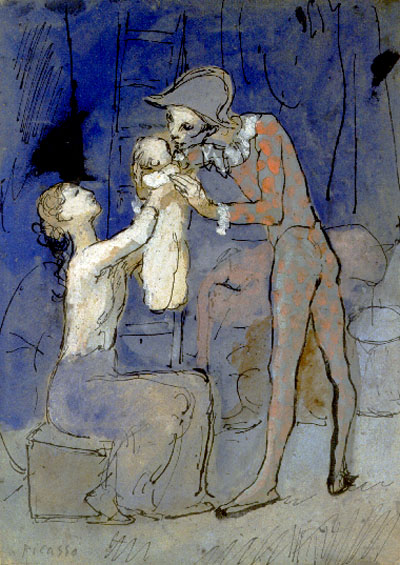
Pablo Picasso - Harlequin Family- 1905 -
http://www.artchive.com/artchive/P/picasso_rose.html
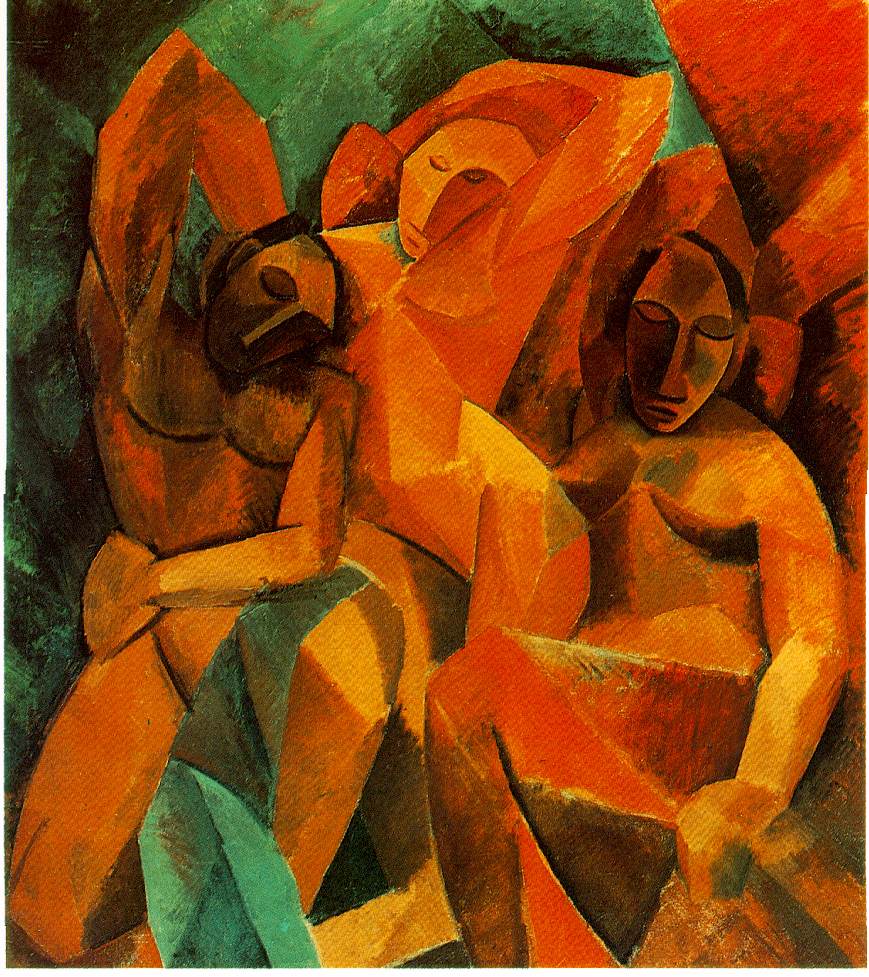
Pablo Picasso - Three Women - 1908 -
http://courses.nus.edu.sg/course/elljwp/cubism.htm
Pablo Picasso (Spanish, 1881-1973) | Top
Henri Rousseau (French Painter, 1844-1910) | Top
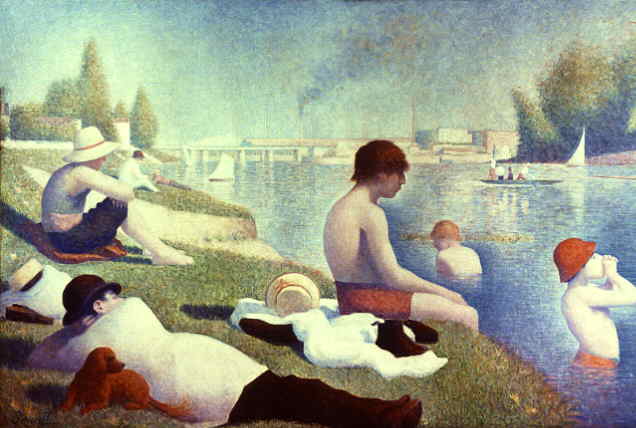
Georges Seurat - Bathing at Asnières -
1883-84 (retouched 1887) -
http://www.ibiblio.org/wm/paint/auth/seurat/baignade/
Georges Seurat (French Painter, (1859-1891) | Top

Walter Richard Sickert - Minnie Cunningham at the Old Bedford - 1892 -
http://www.tate.org.uk/servlet/ViewWork?workid=13422&searchid=10110&roomid=5315&tabview=image
Walter Richard Sickert (British Painter, 1860-1942) | Top
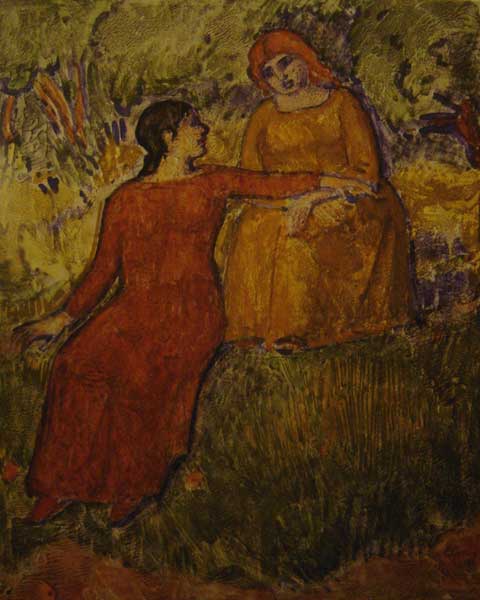
Jan Verkade - Two Women in a Field - circa 1892 -
http://www.kilidavid.com/Art/Pages/Artists/verkade.htm
Jan Verkade (Dutch Painter, 1868-1946) | Top
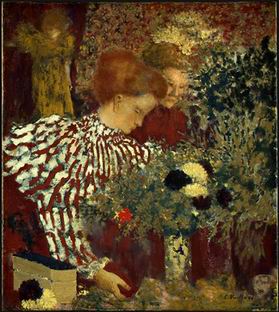
Édouard Vuillard - Woman in stripped dress - 1895
http://www.problogs.com/Post1467.htm
Édouard Vuillard (French Painter,1868-1940) | Top
Worth checking out: Drawing Prompts - Each artist link provides an opening representative image suitable for drawing by students. Additional images and information are also provided to help students explore the vast posibilities of artistic expression
|
|
Melissa and I would like to |